
Keynote Speakers

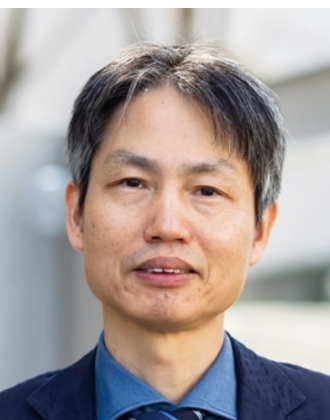
Prof. Takao Sato
University of Hyogo
Takao Sato, Ph.D. is a Professor in the Department of Engineering at the Graduate School of Engineering, University of Hyogo, and a concurrent faculty member at the Advanced Medical Engineering Research Institute. He is a Senior Member of IEEE and serves as a Board Director for the Institute of Systems, Control and Information Engineers (ISCIE). Professor Sato has demonstrated distinguished leadership in both global and domestic academic communities. He served as the General Chair for the 4th Joint Symposium on Advanced Mechanical Science and Technology (4th-JSAMST) in 2024 and was the Program Chair for the 67th Joint Automatic Control Conference (2024), Japan's most prestigious event in control engineering. Most notably, he has provided sustained international leadership as the Program Chair for the International Conference on Advanced Mechatronic Systems (ICAMechS) for six consecutive years from 2021 to 2026. His international contributions also include serving as a Track Chair for IEEE ETFA (2023-2026) and as a Technical Committee Member for IFAC (TC 1.2 and TC 9.4). His research expertise lies in data-driven control systems, with pioneering work in personalized heart rate management featured in Scientific Reports (2024) and the IFAC Journal of Systems and Control (2026). In recognition of his innovative achievements in dual-rate data-driven control of heart rate and heart rate variability (HRV), he received the Multi-symposium Award from the Society of Instrument and Control Engineers (SICE) in 2026. He is also a prolific author, recently co-authoring "Basics of Control Engineering" (2024).
Keynote Title
Advanced Data-Driven Control for Healthy Longevity: Personalized Heart Rate Management in Exercise
Keynote Abstract
Maximizing healthy life expectancy is essential for enhancing global well-being, and maintaining optimal exercise intensity is crucial for both health promotion and safe clinical rehabilitation. While heart rate (HR) serves as a vital indicator of exercise intensity, its dynamic response to physical load varies significantly among individuals, making personalized management challenging. This talk presents an advanced data-driven control framework designed to achieve precise, personalized HR management without the need for complex mathematical modeling. Traditional model-based approaches often require subjects to perform excessive, taxing exercises for system identification. To overcome this, we propose a model-free, data-driven design method that optimizes control parameters directly from a subject's brief exercise data. Furthermore, this presentation introduces our latest breakthrough in dual-rate data-driven systems that simultaneously manage Heart Rate (HR) and Heart Rate Variability (HRV). By dynamically adjusting ergometer resistance based on real-time physiological feedback, our system enhances both physical capability and psychological state, a contribution recognized with the SICE Multi-symposium Award in 2026. Experimental results involving diverse age groups and genders demonstrate a 40% improvement in tracking performance compared to conventional methods. We also discuss how the tuned control parameters provide objective indicators of physiological differences, such as gender-based heart rate sensitivity. These findings pave the way for "Human-in-the-Loop" systems that support healthy longevity through personalized training, athlete conditioning, and advanced cardiac rehabilitation.
Prof. Qun Jin
Waseda University
Qun Jin is a professor in the Department of Human Informatics and Cognitive Sciences, Faculty of Human Sciences, Waseda University, Japan. He has been extensively engaged in research works in the fields of computer science, information systems, and human informatics, with a focus on understanding and supporting humans through convergent research. His recent research interests cover behavior and cognitive informatics, health informatics, artificial intelligence and machine learning, LLM and generative AI, AI agents, big data, blockchain, trustworthy platforms for data federation, sharing, and utilization, cyber-physical-social systems, and applications in healthcare and learning support. He authored or co-authored several monographs and more than 470 refereed papers published in academic journals and international conference proceedings. He is a foreign fellow of the Engineering Academy of Japan (EAJ) and a fellow of the Asia-Pacific Artificial Intelligence Association (AAIA). More information can be found at https://researchmap.jp/jinqun/?lang=en.
Keynote Title
Using Artificial Intelligence to Promote Human Well-being
Keynote Abstract
The purpose of science and technology development around the world is shifting to human well-being. The grand challenges facing human society in the twenty-first century, such as protecting human health and promoting human well-being, cannot be solved by one discipline alone. To address these challenges and social issues, approaches and insights from a wide range of fields have been actively promoted through convergent research facilitated by cross-disciplinary collaboration and innovation. In this talk, after introducing the promising paradigm of convergent research, we will depict our vision on computing for human well-being and technology for the common good. We will further present our recent work in understanding humans and promoting human health and well-being through convergent research and with technology convergence of artificial intelligence and big data, from comprehensive health data analysis for healthcare, to living support and well-being promotion for older people.
Prof. Qing Li
The Hong Kong Polytechnic University
Qing Li is a Chair Professor and Head of the Department of Computing, The Hong Kong Polytechnic University. He received his B.Eng. from Hunan University (Changsha), and M.Sc. and Ph.D. degrees from the University of Southern California (Los Angeles), all in computer science. His research interests include multi-modal data management, conceptual data modeling, social media, Web services, and e-learning systems. He has authored or co-authored over 500 publications in these areas, with over 68,500 citations and an h-index of 106 according to Google Scholar. He is actively involved in the research community and has served as Editor-in-Chief of Computer & Education: X Reality (CEXR) by Elsevier, and as associate editor of IEEE Transactions on Artificial Intelligence, IEEE Transactions on Cognitive and Developmental Systems, IEEE Transactions on Knowledge and Data Engineering, ACM Transactions on Internet Technology, Data Science and Engineering, and the World Wide Web Journal. He has also served as conference chair or program chair for numerous major international conferences, and sits or has sat on the steering committees of DASFAA, ACM RecSys, IEEE U-MEDIA, WISE, and ICWL. Prof. Li is a Fellow of IEEE.
Keynote Title
A Multi-level Querying Method for an Indoor Robot Smart Space
Keynote Abstract
Smart Space denotes dynamic, adaptive environments enhanced with robotics and AI technologies. Examples include smart homes, offices, and cafes. By leveraging and integrating computer vision, natural language processing, AIoT, data mining, recommender systems, and sympathetic computing, Smart Space can improve efficiency, personalization, and user satisfaction through seamless interactions. In this talk, we introduce PolyRAG, a multi-level knowledge question-answering framework supporting multi-level querying for an indoor robot application system. Building on a naive RAG layer, we construct a knowledge pyramid by adding a knowledge graph layer and an ontology schema, so as to obtain a good balance of recall and precision when applied to a specific domain such as coffee robot interactions. We employ cross-layer augmentation techniques for comprehensive knowledge coverage and dynamic updates of the ontology scheme and instances. To ensure compactness, we utilize cross-layer filtering methods for knowledge condensation in knowledge graphs. An experimental coffee robot prototype is constructed, and preliminary empirical studies are conducted to show the effectiveness of PolyRAG in supporting a waterfall model for querying from ontology to knowledge graph to chunk-based raw text.