
Keynote Speakers
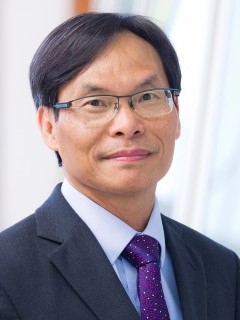
Prof. KWONG Tak Wu Sam
Lingnan University
Professor KWONG Sam Tak Wu is the Associate Vice-President (Strategic Research), J.K. Lee Chair Professor of Computational Intelligence, the Dean of the School of Graduate Studies and the Acting Dean of the School of Data Science of Lingnan University. Professor Kwong is a distinguished scholar in evolutionary computation, artificial intelligence (AI) solutions, and image/video processing, with a strong record of scientific innovations and real-world impacts. Professor Kwong was listed as the World’s Top 2% Scientists by Stanford University since 2021 and one of the most highly cited researchers by Clarivate in 2022 and 2023. He has also been actively engaged in knowledge transfer between academia and industry. He was elevated to IEEE Fellow in 2014 for his contributions to optimization techniques in cybernetics and video coding. He was a Fellow of the Asia-Pacific Artificial Intelligence Association (AAIA) in 2022, and the President of the IEEE Systems, Man, and Cybernetics Society (SMCS) in 2021-23. He is a fellow of US National Academy of Inventors (NAI) and the Hong Kong Academy Awards of Engineering and Sciences (HKAES). Professor Kwong has a prolific publication record with over 350 journal articles, and 160 conference papers with an h-index of 84 based on Google Scholar. He is currently the associate editor of a number of leading IEEE transaction journals.
Keynote Title
High Dynamic Range (HDR) video
Keynote Abstract
High Dynamic Range (HDR) video is a technology that significantly enhances the visual experience by expanding the range of contrast and color in video content. Unlike standard dynamic range (SDR) video, HDR allows for brighter highlights, deeper shadows, and a wider color gamut. This results in more realistic and vibrant images that closely mimic the way the human eye perceives the real world. In this segment, we will delve into the fundamental principles of HDR, exploring how it works, the technical standards behind it (such as HDR10, Dolby Vision, and HLG), and the benefits it brings to various types of content, from movies and TV shows to video games and live broadcasts. In this talk, he will talk about the following: HDR Image Reconstruction High dynamic range (HDR) image reconstruction is a process that aims to create images with a greater range of luminance levels than what is achievable with standard digital imaging techniques. This allows for the capture of both very bright and very dark details in a scene, closely mimicking human vision. By combining multiple images taken at different exposure levels, HDR reconstruction techniques can produce visually stunning and highly detailed images that better represent the range of light present in real-world scenes. EIN: Exposure Induced Network for Single Image HDR Reconstruction The Exposure Induced Network (EIN) for Single Image HDR Reconstruction is a novel deep learning approach designed to generate HDR images from a single standard dynamic range (SDR) input. Unlike traditional methods that require multiple exposures, EIN leverages a neural network to predict and reconstruct HDR content by learning the relationships between different exposure levels. This enables the creation of high-quality HDR images even in situations where only a single exposure is available, making HDR imaging more practical and accessible for various applications. LGFM: HDR Image Quality Assessment Based on Frequency Disparity The Local and Global Frequency Modulation (LGFM) method for HDR image quality assessment is a sophisticated approach that evaluates the quality of HDR images based on the disparity in frequency components. By analyzing both local and global frequency information, LGFM can more accurately reflect the human visual system's sensitivity to different types of artifacts and distortions in HDR content. This results in a more reliable and comprehensive assessment of HDR image quality.
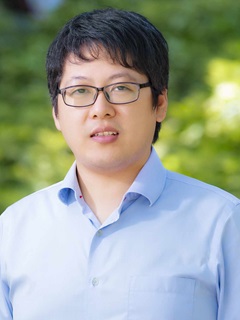
Prof. Junhui Hou
City University of Hong Kong
Junhui Hou is an Associate Professor with the Department of Computer Science, City University of Hong Kong. His research interests include multi-dimensional visual computing, such as light field, hyperspectral, geometry, and event data. He received the Early Career Award from the Hong Kong Research Grants Council and the Excellent Young Scientists Fund from NSFC. He has served or is serving as an Associate Editor for IEEE TIP, TVCG, TMM, and TCSVT.
Keynote Title
Deep Modeling and Processing of 3D Geometric Data for 3D Spatial Intelligence: Representation, Learning Architecture, and Loss Function
Keynote Abstract
3D spatial intelligence—the ability to perceive, reason about, and manipulate geometric data—is fundamental to advancing AI applications in robotics, AR/VR, and autonomous systems. In this talk, I will showcase our endeavors to push the boundaries of this field, starting with the fundamental representation of 3D geometric data, the development of a cross-modal/structural learning mechanism, to the efficient yet effective loss function. These new perspectives are poised to unlock numerous possibilities.
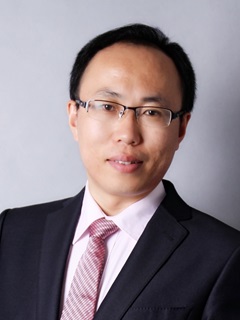
Prof. Hongrui Cao
Xi'an Jiaotong University
Cao Hongrui is a Professor at Xi'an Jiaotong University, Fellow of Alexander von Humboldt Foundation, a recipient of the National Natural Science Foundation of China (NSFC) Excellent Young Scientists Fund, Elsevier "China Highly Cited Scholar", and has been listed among the world's top 2% scientists for four consecutive years. He serves as Council Member of the Chinese Vibration Engineering Society, Executive Council Member of the Shaanxi Vibration Engineering Society, etc. He has presided over 1 National Key R&D Program project, 4 NSFC projects, and more than 10 other projects such as major special projects and pre-research projects of the General Armament Department. He has won 1 First Prize of Scientific and Technological Progress of Shaanxi Provincial Higher Education Institutions, the Best Paper Award from the International Journal of Machine Tools and Manufacture (2019), and 5 excellent paper awards from academic societies including the Chinese Mechanical Engineering Society, Chinese Vibration Engineering Society, and Chinese Aeronautical Society.
Keynote Title
Vibration monitoring and control technology of intelligent machine tool spindles
Keynote Abstract
The intelligent spindle is a core functional component of the new generation intelligent machine tools and the development direction of future spindles. Compared with ordinary spindles, intelligent spindles need to achieve higher speed, efficiency, and reliability. During high-speed cutting, factors such as rotational speed, temperature rise, and the nonlinearity of rolling bearings can cause changes in the dynamic characteristics of the spindle, which may transform the originally stable cutting state into chatter. The time-varying nature of the spindle's dynamic characteristics poses great challenges for fault diagnosis and vibration control. This report introduces research work related to intelligent spindles from three aspects: the vibration mechanism, monitoring, and active control, discusses the current research challenges, and prospects the future development trends.